


Hyundai Certified Collision Center
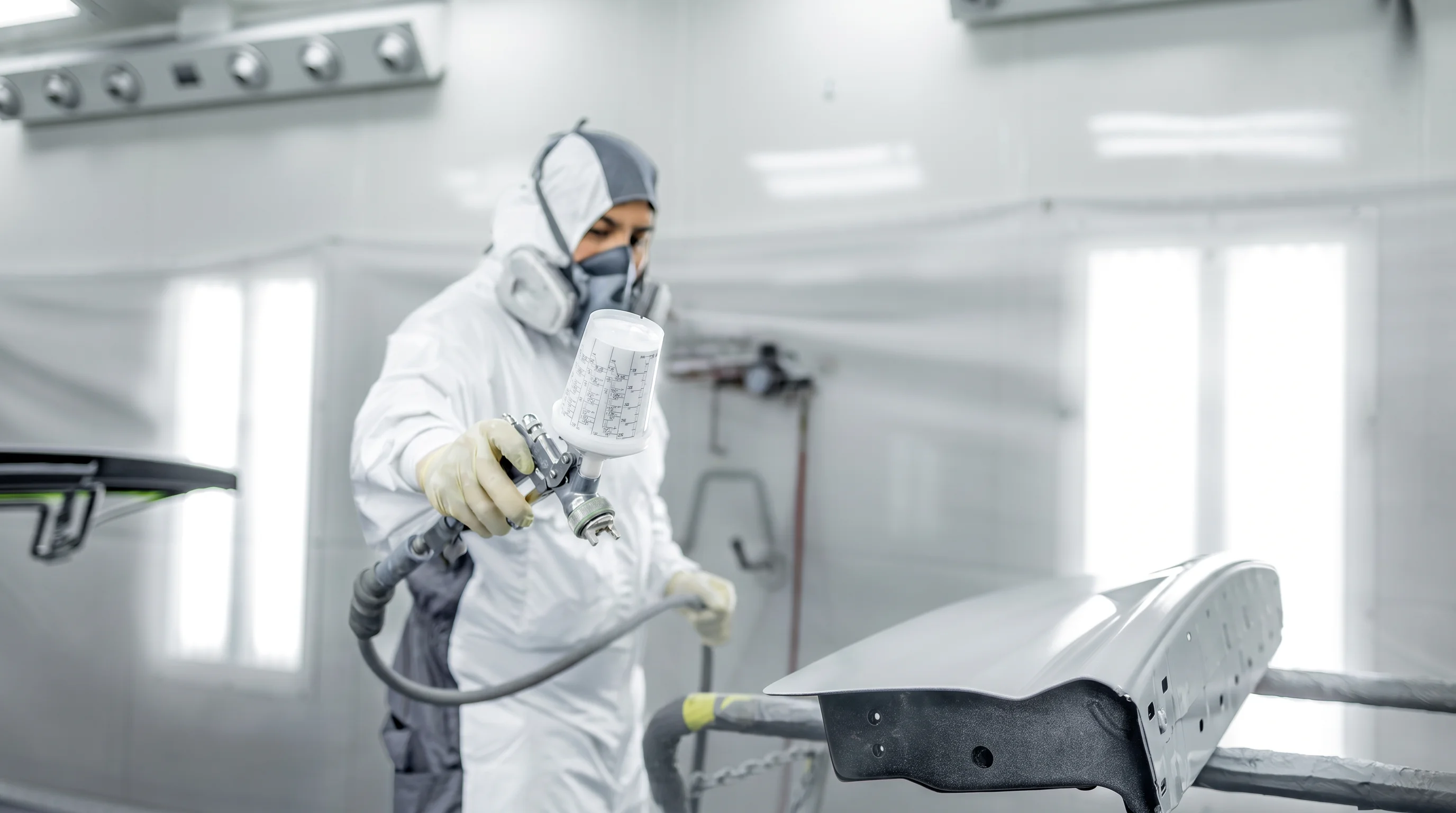
After a collision, the shop you choose decides how well your Hyundai is restored. That includes its structure, its finish, and its safety electronics. Certified Collision Center of Riverside holds Hyundai collision repair certification and I-CAR Gold Class recognition. We repair Hyundai vehicles with genuine Hyundai parts and factory repair procedures. From our collision center at 3040 Adams St, we serve Hyundai drivers across Riverside, Corona, Eastvale, Norco, and Jurupa Valley.
In California, you also decide where that repair happens. Under the California Department of Insurance Auto Body Repair Consumer Bill of Rights, you can pick the shop that repairs insured body damage. Your insurance company cannot make you use a specific one.
This information is provided for general educational purposes only and does not constitute legal advice. Warranty coverage depends on the specific terms of your vehicle’s warranty agreement. Consult your owner’s manual or a qualified legal professional for guidance on your individual situation.
What It Takes to Become a Hyundai Certified Collision Center
Collision Performance Network, an OEC company, runs Hyundai’s Certified Collision Repair Center Network Program. Dealer-owned, independent, and multi-shop body shops can all take part. Each one needs a Hyundai dealer sponsor and must meet every program requirement.
The Certification Process
Certification is not a self-declared badge. According to Hyundai’s program announcement, a facility moves through four steps:
- Dealer sponsorship: a local Hyundai dealer sponsors the collision facility.
- Online application: the facility applies to the program.
- Capability assessment: an online review of the shop and the repairs it can handle.
- Inspection-audit: an inspection of the facility itself.
Hyundai Certified vs. Hyundai Recognized
Hyundai also maintains a separate Recognized tier. The difference comes down to dealer sponsorship:
| Factor | Hyundai Certified | Hyundai Recognized |
|---|---|---|
| Hyundai dealer sponsorship | Required | Not required |
| Program requirements | Must meet all certification requirements | Must otherwise meet program requirements |
| Status earned | Hyundai Certified status and its program benefits | Recognized status only; not eligible for Certified status |
Hyundai also requires these shops to earn and keep I-CAR Gold Class recognition. That means every major repair role on the team keeps its training current, not just one technician.
How Hyundai SmartSense Is Recalibrated After Body Repairs
Hyundai SmartSense driver-assist features depend on cameras and radar sensors aimed at precise angles. On equipped models these include Forward Collision-Avoidance Assist, Lane Keeping Assist, and Blind-Spot Collision-Avoidance Assist. Front, rear, or side damage can knock those sensors out of position. Even a small shift in the structure can change how they read the road.
Driver-assist and safety systems are supplemental aids and are not a substitute for safe, attentive driving. Their effectiveness depends on weather, road, and traffic conditions and other factors. Always obey traffic laws and stay attentive to the road. See your owner’s manual for system details and limitations.
Calibration is now a routine part of collision repair. CCC Intelligent Solutions’ Crash Course 2026 report found calibrations on 28.3% of repairable estimates in 2025, up from 21.8% the year before.
Common Repairs That Trigger Calibration
The vehicle’s OEM repair procedure determines when calibration is required. These repairs commonly trigger it:
| Repair | Why Calibration May Be Needed |
|---|---|
| Bumper removal or replacement | Radar units can sit behind the bumper, and reinstalling the bumper can change their position. |
| Windshield replacement | New glass can slightly alter the position of the forward-facing camera. |
| Side-mirror removal and installation | Industry guidance says ADAS-equipped vehicles need recalibration. |
| Suspension or alignment work | The same guidance applies after suspension work. |
Static vs. Dynamic Calibration
| Factor | Static Calibration | Dynamic Calibration |
|---|---|---|
| Where it happens | Inside the shop, vehicle stationary | On the road, vehicle in motion |
| How it works | Targets placed at precise distances and heights, squared to the vehicle centerline | The car is driven as the automaker directs while a scan tool monitors the sensors |
| Prerequisites | OEM-specified ride height, tire pressure, and fluids, plus controlled lighting | OEM-specified driving conditions |
Some vehicles require one method, and some require both: a static calibration followed by a dynamic calibration.
The Restoration Sequence
Restoring driver-assist systems to OEM specifications follows a set order:
- Pre-repair scan: identifies stored fault codes and sensor disruptions before work begins.
- Structural and mechanical realignment: measuring systems bring the structure back to factory dimensions. Then all four wheels are aligned.
- Sensor and bracket inspection: brackets, radar mounts, and cameras are inspected and secured.
- Calibration: static targets, a dynamic drive, or both, as the OEM procedure specifies.
- Post-repair scan: confirms every module communicates without fault codes before delivery.
For a deeper walkthrough, read our guide to ADAS calibration after collision repair.
Why Certification Goes Beyond Repair Information
Hyundai sells HyundaiTechInfo service information subscriptions to repair shops. So access to repair information alone does not set a shop apart. Certification adds a dealer sponsor, I-CAR Gold Class training, and an inspection-audit of the shop.
What to Ask Before Choosing a Collision Repair Shop
| Ask | Why It Matters |
|---|---|
| Is your manufacturer certification current? | Hyundai’s program includes an inspection-audit, so confirm the shop’s status is active. |
| Do your technicians train to I-CAR Gold Class? | Hyundai requires Gold Class for its certified facilities. |
| Will my estimate identify the parts being used? | Under California rules, parts on an estimate are presumed new unless identified as used, rebuilt, or reconditioned. New crash parts are presumed OEM unless identified as non-OEM aftermarket. |
| Is ADAS calibration done in-house or sublet, and will I receive the scan reports? | The estimate must state any sublet repair, and post-repair scan and calibration records document that safety systems were verified. |
| Can you repair structural and aluminum damage? | Aluminum needs its own work area and tools, because steel dust can cause galvanic corrosion. |
This information is provided for general educational purposes only and does not constitute legal advice. Warranty coverage depends on the specific terms of your vehicle’s warranty agreement. Consult your owner’s manual or a qualified legal professional for guidance on your individual situation.
For more guidance, read what to look for in a car collision shop.
Your Estimate Rights Under California Law
| Your Right | What It Means | Source |
|---|---|---|
| Choose your repair shop | Your insurer cannot require repairs at a specific shop. | CA Department of Insurance |
| Get an independent estimate | You may get one from a registered auto body shop, even while pursuing an insurance claim. | CA Department of Insurance |
| Written estimate and authorization | A written estimate and your authorization are required before repairs begin. | Bureau of Automotive Repair |
| Approval after teardown | If teardown reveals more damage, you receive an itemized estimate for the added parts and labor, and work continues only with your authorization. | Bureau of Automotive Repair |
This information is provided for general educational purposes only and does not constitute legal advice. Warranty coverage depends on the specific terms of your vehicle’s warranty agreement. Consult your owner’s manual or a qualified legal professional for guidance on your individual situation.
Hyundai Collision Repair at Certified Collision Center of Riverside
Parts, Pricing, and Warranty
Our team offers free estimates, competitive pricing, and technicians trained on Hyundai vehicles. We use original equipment manufacturer (OEM) parts built to fit your Hyundai car, SUV, or EV. Most OEM parts carry a manufacturer’s warranty once repairs are complete. Our repairs are also backed by our lifetime warranties.
This information is provided for general educational purposes only and does not constitute legal advice. Warranty coverage depends on the specific terms of your vehicle’s warranty agreement. Consult your owner’s manual or a qualified legal professional for guidance on your individual situation.
Insurance Companies We Work With
- Selective Insurance
- Amica Mutual Insurance Company
- Chubb Insurance
- PURE Insurance
- Mercury Insurance
We participate in the Mercury Direct Repair Program. See the full list of insurance providers we work with.
Our Other Manufacturer Certifications
Hyundai Collision Repair FAQs
Can I choose my own collision repair shop in California?
Yes. The California Department of Insurance Auto Body Repair Consumer Bill of Rights lets you pick the shop that repairs insured body damage. Your insurer may suggest shops, but it cannot require a specific one.
Will I get a written estimate before work begins?
Yes. California’s Bureau of Automotive Repair requires a written estimate and your approval before repairs. If the shop finds more damage once parts come off, it must give you an itemized estimate for the extra work and get your approval first.
Will repairs at a non-dealer shop void my Hyundai warranty?
No. The Federal Trade Commission says a manufacturer or dealer cannot deny warranty coverage just because someone other than the dealer did the work. To deny a claim, the manufacturer must show that a bad repair or part caused the damage. The rest of your warranty stays in effect.
This information is provided for general educational purposes only and does not constitute legal advice. Warranty coverage depends on the specific terms of your vehicle’s warranty agreement. Consult your owner’s manual or a qualified legal professional for guidance on your individual situation.
What is the difference between I-CAR Gold Class and Hyundai certification?
I-CAR Gold Class is an industry training award. It shows a shop keeps its training current across every major repair role. Hyundai certification builds on it. The program requires Gold Class plus a dealer sponsor, a capability assessment, and an inspection-audit.
How do I know if my Hyundai needed sensor calibration?
Work on bumpers, windshields, side mirrors, suspension, or panels near sensors often calls for calibration. Your vehicle’s factory repair procedure decides. Ask the shop for the post-repair scan report and calibration records, which show the systems were checked.
Driver-assist and safety systems are supplemental aids and are not a substitute for safe, attentive driving. Their effectiveness depends on weather, road, and traffic conditions and other factors. Always obey traffic laws and stay attentive to the road. See your owner’s manual for system details and limitations.
Schedule Your Hyundai Collision Repair in Riverside
Visit Certified Collision Center of Riverside at 3040 Adams St, Riverside, CA 92504, or call our collision team at 855-890-6608. Our collision center hours are listed below.
| Day | Collision Hours |
|---|---|
| Monday – Friday | 7:30 AM – 5:00 PM (live call service until 7:00 PM) |
| Saturday | 8:00 AM – 1:00 PM |
| Sunday | Closed |
Need to drop off outside business hours? Our after-hours drop-off uses a key drop box next to the service entrance. Drivers from Moreno Valley, Colton, and across the Inland Empire can also explore more of our collision repair research.
Disclaimers
The information on this page is provided for general informational purposes only and is subject to change without notice. Certifications, services, and warranty coverage vary by vehicle and repair; please contact Certified Collision Center of Riverside for details specific to your situation. Certified Collision Center of Riverside is registered with the California Bureau of Automotive Repair, B.A.R. Registration #311634.
This information is provided for general educational purposes only and does not constitute legal advice. Warranty coverage depends on the specific terms of your vehicle’s warranty agreement. Consult your owner’s manual or a qualified legal professional for guidance on your individual situation.
Driver-assist and safety systems are supplemental aids and are not a substitute for safe, attentive driving. Their effectiveness depends on weather, road, and traffic conditions and other factors. Always obey traffic laws and stay attentive to the road. See your owner’s manual for system details and limitations.